

Why Blaze Spins Casino Cashback Program Delivers Value UK Math Breakdown
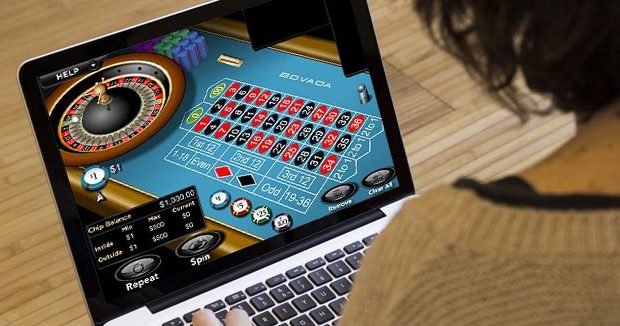
I’ve spent years analyzing casino loyalty mechanics, and I always coming back to one simple truth: cashback without wagering requirements is the most mathematically honest perk a player can receive https://blaze-spins.uk.com/. Here at Blaze Spins Casino, the cashback program isn’t dressed up with hidden multipliers or locked behind playthrough demands. You miss a few hands of blackjack or a session on a high-volatility slot, and the system quietly credits real withdrawable funds back to your account. In this breakdown, I’m going to explain the numbers as I see them, showing exactly why this program shifts the long-term edge in your favour more than any glossy welcome offer ever could. Forget the marketing fluff; let’s talk pure value.
Working out the Real Percentage – How Much Your Losses Truly Return
Let’s get the calculator up. Assume I lose £500 across a combination of high-RTP slots and a few roulette spins in one week. With a 10% cashback rate, I obtain £50. That could sound modest, but compare it to the alternative: a zero-cashback casino where the same £500 loss is a cold, final number. In my experience, that £50 rebate effectively lowers my cost of entertainment to £450 immediately. If the average slot holds a 96% RTP, my theoretical loss on £5,000 of wagering would be £200. The cashback, however, isn’t theoretical; it applies to actual losses, not total stakes. So on that £500 actual drop, the £50 back brings my real loss down to £450, which can represent a significantly lower house edge than the raw RTP suggests when calculated against the total action that produced the result.

I like to calculate yearly these numbers for a clearer picture. A regular player accumulating 100,000 spins a year at £1 each with a 4% house edge expects to lose £4,000. In a cashback-free environment, that’s the final figure. At Blaze Spins, if those losses distribute evenly across 52 weeks, even a flat 10% rebate on weekly negative balances could return roughly £400 over the year, reducing the net loss to £3,600. That single percentage shift in effective cost often outperforms chasing a slightly higher RTP game with no cashback safety net, especially because cashback is realised on the exact outcomes I actually experienced, not on a statistical average I might never hit.
The Simple Mechanics of the Cashback Program
Whenever I evaluate a reward scheme, the first thing I verify is whether I can clarify the terms to a friend in thirty seconds. Blaze Spins Cashback Program satisfies that test with ease. You opt in, you play the games you already love, and if your weekly net position is negative, a percentage of those losses returns to your balance as cash. There’s no tiered nonsense on day one; the base rate is clear and applies regardless of which slot or table game produced the red ink. For me, transparency is worth mathematical points because I never need to discount the advertised figure for opaque conditions. I see a 10% headline, and I know that a £200 losing week genuinely deposits £20 back in my pocket, no questions asked.
The rhythm of weekly settlement is important more than casual players realise. Because the clock resets every Monday, I can treat each seven-day block as a fresh risk budget. I’m not trapped into chasing a monthly milestone that feels too distant to influence my decisions. This short feedback loop lets me adjust stakes based on actual returns, and it creates a psychological safety net. From a pure probability standpoint, having a guaranteed rebate on losses over a defined interval reduces the variance of ruin, which I’ll demonstrate with hard figures later.
The Risk Reducer: Turning Losing Streaks into Manageable Dips
High-variance slots can exhaust a bankroll worryingly fast, and I recognize the cold sweat of watching a balance decrease by half in twenty minutes. The cashback program serves as a financial airbag. When I encounter a downswing of £400 in a day, I realize that a portion will return on Monday. That knowledge alters my decision-making. Instead of getting frustrated and chasing losses with larger bets, I’m more likely to step away and wait for the rebate. The mathematical benefit here is that cashback reduces the effective size of a losing streak. A brutal £1,000 month suddenly transforms into a £900 month, and that £100 difference might be the gap between giving up in frustration and resuming with a clear head the following week.
Quantitatively, I evaluate volatility by the standard deviation of session outcomes. Including a fixed-percentage cashback on negative weeks essentially shortens the left tail of my profit distribution. A £2,000 loss retains £200 via cashback, limiting the maximum pain in a given period. That cap tightens the spread of possible net results, lowering my overall bankroll volatility. For a player handling a finite budget, this is impactful. I can schedule my entertainment spend with more accuracy, understanding that the worst-case scenario is eased by a known factor. Few features in casino gaming present this kind of direct, calculable risk reduction without hidden conditions.
The way Cashback Improves Your Effective RTP Free of Wagering Strings
I’ve long believed that the true gauge of a casino’s fairness is what a player can cash out without friction. Traditional bonuses carry a wagering requirement, implying a £50 bonus might necessitate £1,750 in play before conversion to cash. Mathematically, that erodes most of the expected value. Cashback at Blaze Spins is provided as unrestricted cash. I can access it immediately or reuse it with full control. That omission of playthrough artificially inflates my effective return-to-player percentage in a way that no sticky bonus can equal. If my natural RTP on a session is 96%, the 10% cashback on losses effectively raises my floor under a negative run, bumping my personal RTP experience higher when I need it most.
Consider a session where I wager £1,000 on a 96% game and end up £100 down. My actual return on that wagering is 90%. The cashback injects £10, driving my real return to 91%. Without cashback, I’m sitting at 90%. Over many sessions, these small boosts accumulate. The real beauty lies in the fact that the boost works precisely during losing sequences, the times when my bankroll most craves a cushion. This asymmetric benefit (helping only when I lose) is a mathematical hedge that smooths my overall volatility curve without any strings attached to the repaid funds, which I find immensely valuable.
The Layered Advantage: Reward Tiers and Enduring Worth
A factor seldom mentioned is how cashback affects loyalty progress. At Blaze Spins, regular gameplay grants the base rebate and advances you through the VIP tiers, which can increase the cashback percentage. Let’s say a dedicated player attains a tier where cashback goes up to 12%. On that same £50,000 monthly wagering scenario with a £4,200 losing month, the rebate rises to £504. Across a full year, the uplift from 10% to 12% provides an extra £168 per £10,000 lost, which for a high roller can mean thousands in additional returned value. The maths here is straightforward and clear: a two-percentage-point increase in cashback directly shaves that amount off the long-term house edge, no estimation required.
I also factor in the time value of these returns. Cashback credits on Monday morning mean I can reinvest those funds during the same week’s peak promotional windows, such as enhanced RTP tournaments or free spins events. This ability to reuse rebated cash into timely opportunities increases its utility beyond the static percentage figure. If I use £50 of cashback on a slot with a temporary 97% RTP event, I secure an additional edge that amplifies the initial rebate. Over a year of disciplined scheduling, this tactical redeployment can lift my effective return several tenths of a percent higher than the raw cashback rate suggests, turning a simple rebate into a strategic bankroll tool that rewards planning as much as luck.
A Side-by-Side Comparison versus Traditional Deposit Bonuses
Almost every promotional email I get promises a 100% match up to £200, but the maths behind that glitter is often ugly. Let’s put it next to cashback. A £200 deposit bonus with 35x wagering requires me to stake £7,000 before I can withdraw a penny of bonus-derived winnings. If I use a 96% slot, my expected loss during that playthrough is £280. That means I’m likely to lose the entire bonus and then some before meeting the requirement. In contrast, a week of normal play with a £200 net loss earns £20 cashback with zero playthrough. The expected value of the deposit bonus, after factoring the house edge, frequently turns negative for all but the luckiest players, whereas cashback’s EV is always a straight percentage of actual losses, never weakened by wagering demands.
I’ve conducted these comparisons dozens of times for my own play logs. In one typical month, I deposited £300, took a matching bonus, and emerged with £45 after grinding the wagering, mostly because variance had its way. That same month, if I had simply played with my deposit under a 10% cashback model and ended with a net loss of £180, I would have received £18 back, leaving me £18 better off than the bonus scenario with zero of the mandatory grinding. The simplicity of cashback implies I spend my time choosing games for entertainment and strategy, not computing how many more spins I must endure to unlock a theoretical reward that may already be lost to the house edge.
Player Case Studies: The Numbers in Action
Scenario 1: The Recreational Weekend Player
I want to put flesh on these percentages. Consider a player depositing £100 each Friday, focuses on medium-volatility slots at 96.2% RTP, and typically busts out or doubles up by Sunday. During a month, suppose she endures three losing weekends of £100 each and one winning weekend cashing out £180. Without cashback, her net standing is a £120 loss for the month. Applying Blaze Spins’ 10% cashback to every losing week, she obtains £10 after each of those three losing weekends, totalling £30. Her monthly net loss now reduces to £90, a 25% increase in kept funds. That £30 can fund another weekend of play without touching her main budget, lengthening her playtime without any extra financial burden.
Case 2: The Serious Slot Player
Now look at a high-volume player wagering £5 per round on a high-volatility game at 94% RTP, betting roughly £50,000 in a month. Expected loss alone stands at £3,000, but real results can vary dramatically. In a tough month his actual loss climbs to £4,200. The cashback program returns £420, cutting his net loss to £3,780. This is no trivial amount; it essentially provides him a month’s worth of extra RTP points during a harsh streak. Over a year, if his luck returns to the expected £36,000 loss on £600,000 wagered, cashback might refund £3,600, reducing his net loss to £32,400. That 10% rebate raises his effective RTP from 94% to about 94.6%, a change that serious players would typically need to accomplish by constantly seeking higher-return games, which are frequently less fun to play.